August 5, 2026 · Operation Forgotten Heroes
Someone Who Understands: A Veteran's Road Back Through Peer Support
Recovery rarely turns on a program or a prescription alone. More often it turns on a single moment — when a veteran realizes the person across from them has walked the same dark road and made it back.
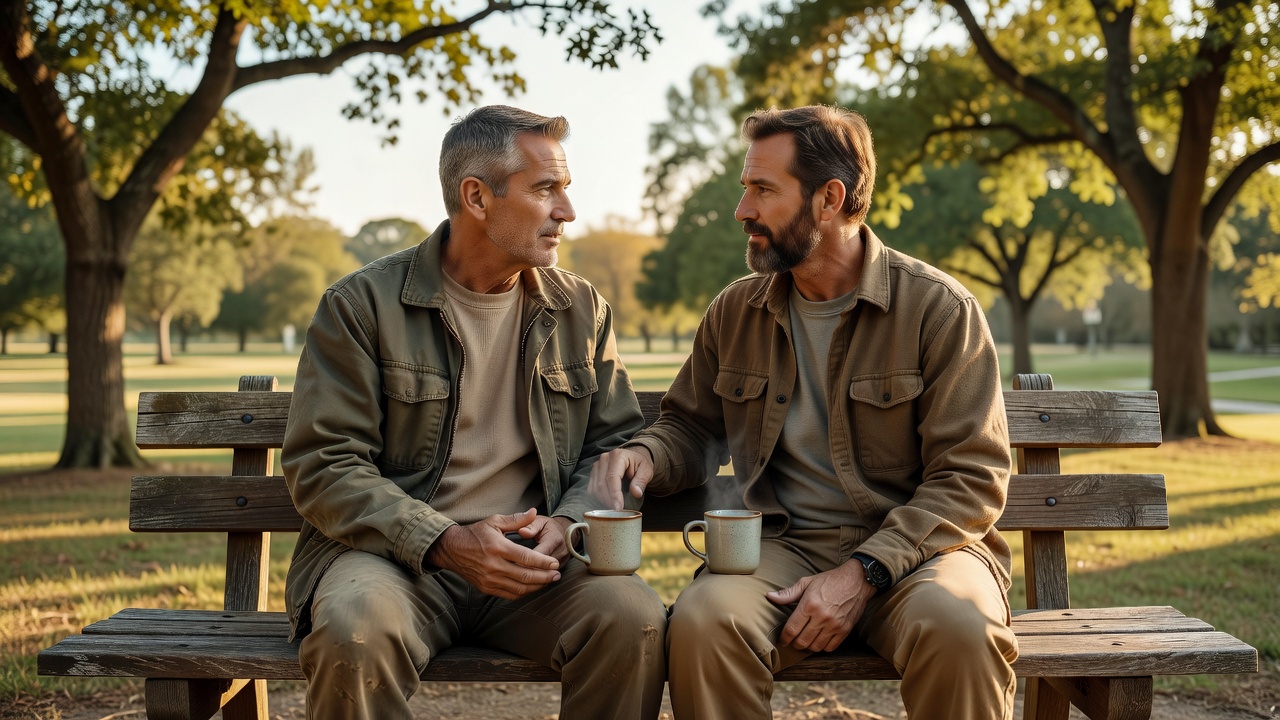
By the time Danny reached out, he had already run out of the things that used to hold him together. The uniform was long folded away. The structure, the mission, the men he would have died for — all of it had faded into a quiet apartment and a phone that mostly stayed dark. What was left was the drinking, and the growing certainty that no one on the outside could possibly understand what he was carrying.
That certainty is one of the most dangerous parts of a veteran's struggle. It tells them they are alone. It tells them that asking for help is weakness, and that the people offering it could never really get it. For Danny, it nearly won.
The one thing that got through
What finally reached him was not a pamphlet or a hotline script. It was a phone call from another veteran — someone who had been where Danny was, who had felt the same shame and the same pull, and who had found a way out. There was no lecture. Just a familiar voice saying, in effect, I know. I've been there. You don't have to do this by yourself.
That is the quiet power of peer support. A clinician can offer expertise. A program can offer a plan. But a fellow veteran offers something neither of those can: proof. Proof that the road back exists, because they are standing on the other end of it.
Why peer support reaches where nothing else can
Veterans are trained to trust the person next to them. That instinct does not disappear when the service ends — but too often there is no one left in that seat. Peer support puts someone back in it. Someone who does not need the trauma explained, who recognizes the isolation, the hypervigilance, the late nights, and who can say with total credibility that it gets better.
It also removes the fear of judgment. When the person encouraging you to get sober has their own recovery date, honesty stops feeling dangerous. Walls come down. And once a veteran is willing to be honest — with someone else and with themselves — real recovery can finally begin.
Recovery is not a straight line
Danny's road back was not clean or quick. There were good weeks and hard ones, progress and setbacks, days when the old certainty crept back in. What changed was that he no longer faced any of it alone. Every stumble had a phone number attached to it. Every hard night had someone on the other end who would not flinch and would not walk away.
That consistency — someone showing up again and again, without conditions — is what turns a single good moment into lasting change. Recovery is rarely won in one decision. It is won in a thousand small ones, made a little easier each time because someone is walking beside you.
How OFH builds the bridge
At Operation Forgotten Heroes, peer support is not an add-on — it is the heart of how we work. We connect veterans in crisis to people who have lived it and come through, and we stay in the picture as they move into treatment, housing, and recovery. We make the calls, we check in when the world goes quiet, and we make sure no veteran has to white-knuckle their way through the hardest stretch by themselves.
Danny is sober today. More than that, he now answers the phone for other veterans who are where he once was — which is exactly how this is supposed to work. Recovery, passed hand to hand, from someone who has been there to someone who still needs to believe they can get there too.
Danny is a composite drawn from the experiences of veterans OFH serves; identifying details have been changed to protect privacy.